
Introduction
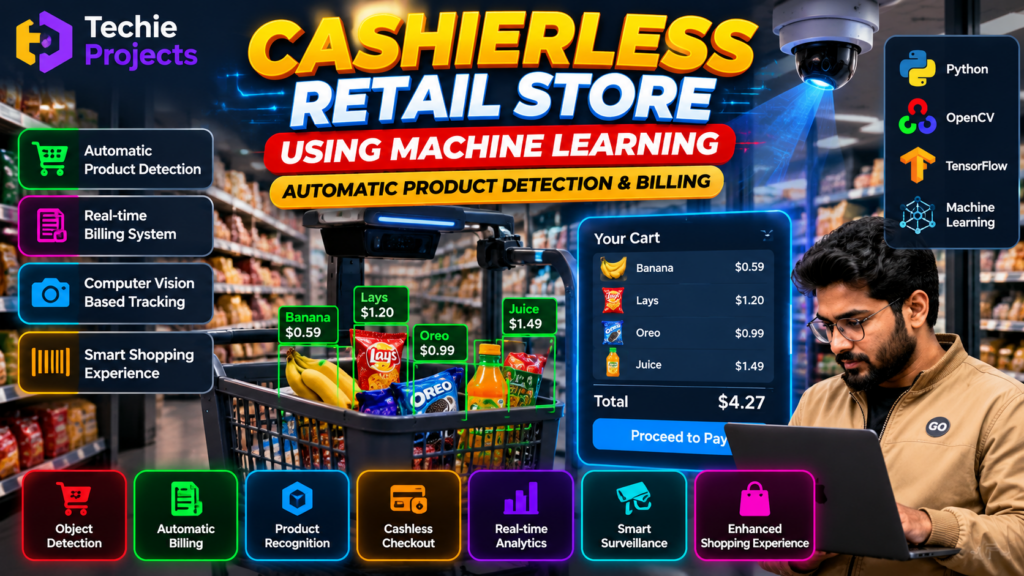
The cashier-less retail store using machine learning project demonstrates how Python, artificial intelligence, and computer vision can support automated shopping and billing workflows. Designed as an academic project for final-year CSE, IT, and computer engineering students, this solution explores product recognition, shopping cart management, and retail automation.
Traditional stores often rely on manual checkout processes. A cashier-less retail store using machine learning explores how software can simplify selected tasks through intelligent product identification and automated price calculation. It is a useful project topic for students interested in Python development, machine learning, and smart retail applications.
If you need a final-year project, contact Techie Projects to discuss source code availability, included features, documentation, and customization options.
🎬 Cashier-Less Retail Store Using Machine Learning – Project Demo Video
Watch the project demonstration to understand the retail workflow, application interface, and smart billing concepts. The demonstration can help you evaluate the project before discussing your academic requirements.
What Is a Cashier-Less Retail Store Using Machine Learning?
A cashier-less retail store using machine learning is a software-based concept that explores how AI techniques can support product identification and checkout automation. Depending on the implementation, it may combine Python, computer vision, product data, and a billing interface.
The project provides an educational starting point for understanding how machine learning can be applied to modern retail systems.
🎯 Project Objectives
The main objectives of this project are:
- To explore machine learning applications in retail automation.
- To understand image processing and product recognition concepts.
- To develop a software interface for a smart retail workflow.
- To investigate how product information can be connected to billing.
- To learn how AI-based applications can improve selected retail operations.
- To provide a practical foundation for further research in intelligent shopping systems.
Key Features of the Project
1. Product Recognition Concept
Machine learning and computer vision techniques can be used to identify products from images when suitable training data and a compatible model are available.
2. Smart Shopping Workflow
The system can demonstrate how product information moves through a retail application, from item identification to cart or purchase processing.
3. Automated Billing Interface
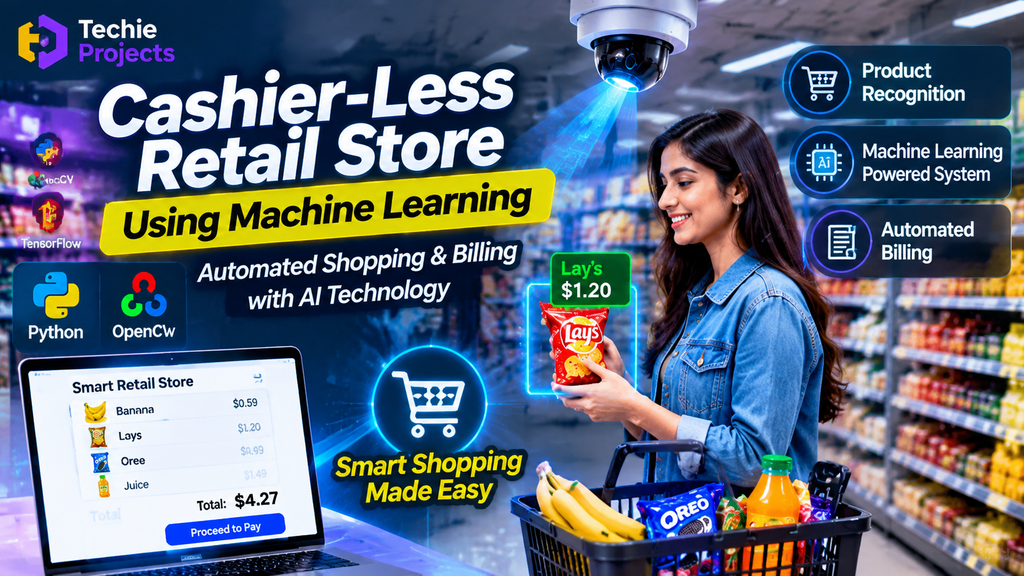
A billing module can calculate the total price of recognized or selected products using their stored prices. The exact billing functionality depends on the project implementation.
4. Python-Based Development
Python provides access to machine learning, image processing, and application development libraries, making it suitable for an educational retail automation project.
5. Scope for Customization
Students can explore additional features such as inventory integration, product search, sales reports, and improved recognition models, subject to project requirements.
⚙️ How the Project Works
A typical cashier-less retail prototype may follow these stages:
- Product data preparation: Collect and organize product images or product records required by the application.
- Model development: Train or configure a suitable machine learning model if image-based recognition is included.
- Product identification: Process an image or other supported input to identify a product.
- Cart management: Add recognized or selected products to the shopping list.
- Price calculation: Retrieve stored product prices and calculate the bill.
- Result display: Show the selected products and the calculated total through the application interface.
The actual workflow may differ according to the source code and features included in the selected version.
🛠️ Technologies Used
The technologies may include the following, depending on the implementation:
- Programming language: Python
- Machine learning: A suitable classification or object-detection model
- Computer vision: OpenCV, where required
- Data processing: NumPy and Pandas, where applicable
- User interface: A Python GUI framework or web interface
- Database: SQLite, MySQL, or another compatible data store, if included
Please confirm the final technology stack against the delivered project version before using it in your project report.
Software and Hardware Requirements
Software Requirements
- Python environment compatible with the supplied source code
- Required Python libraries and dependencies
- Code editor such as Visual Studio Code or PyCharm
- Compatible operating system
- Dataset and trained model files, if required
Hardware Requirements
- Computer or laptop capable of running the application
- Keyboard, mouse, and display
- Camera or image input device if the implementation uses live image capture
Actual system requirements depend on the model size, camera setup, and application design.
🎓 Applications of Cashier-Less Retail Technology
This project introduces concepts that can be explored in several retail scenarios:
- Smart shopping and automated checkout research
- Supermarket automation prototypes
- Product recognition systems
- Retail inventory management
- AI-based customer shopping applications
- Computer vision and machine learning demonstrations
A student prototype should not be considered a production-ready retail system without appropriate testing, security controls, payment integration, and real-world validation.
Benefits for Final-Year Engineering Students
The cashier-less retail store using machine learning project can help students connect theoretical concepts with a practical software application.
- Understand the fundamentals of machine learning and computer vision.
- Explore a real-world retail automation use case.
- Practice Python development and software integration.
- Prepare project documentation and a demonstration, according to college requirements.
- Extend the application with additional features for learning and experimentation.
💻 Get the Cashier-Less Retail Store Project
Looking for a cashier-less retail store using machine learning project for your final-year submission? Techie Projects can help you explore project availability and discuss the implementation that best matches your requirements.
Before purchasing, you can ask about the available source code, supported features, software requirements, documentation, and customization options.
Contact Techie Projects for project enquiries:
- 📲 Call/WhatsApp: +91-9460060699
- 🌎 Website: www.techieprojects.com
- 📺 Instagram: @pythonprojects_
Share your course, submission deadline, and required features to help clarify whether the project is suitable for your academic needs.
Frequently Asked Questions (FAQs)
1. What is a cashier-less retail store project?
It is an academic software project that explores how machine learning, computer vision, and billing software can support automated shopping workflows.
2. Which programming language is used?
Python is a suitable choice for this type of project. The exact language and libraries depend on the implementation supplied.
3. Is this project suitable for final-year CSE students?
Yes, it can be suitable for CSE, IT, and related engineering students interested in machine learning, computer vision, and retail automation. Confirm your college’s project requirements before selecting it.
4. Can the project be customized?
Additional features may be possible depending on the source code, available datasets, hardware, and development scope. Contact Techie Projects to discuss your requirements.
5. Does the project include source code and documentation?
Please confirm the included deliverables before purchasing. Ask about source code, setup instructions, project documentation, datasets, model files, and demonstration support.
6. Can this prototype be deployed directly in a real supermarket?
Not without further development and testing. A commercial deployment may require reliable product recognition, secure transactions, privacy protections, inventory integration, and robust error handling.
🎓 Explore Related Projects
If you are interested in AI-powered retail systems, you may also explore these project topics:
- Retail Shopping Cart Using QR Code Scanning
- Inventory Management System Using Python
- Object Detection Using Deep Learning
- Sales Prediction Using Machine Learning
- Smart Billing and Point-of-Sale System
Explore more ideas through the Machine Learning Projects, Deep Learning Projects, and OpenCV Projects sections of Techie Projects.
Conclusion
The cashier-less retail store using machine learning project is an interesting way to explore AI-powered retail automation with Python. It brings together concepts from product recognition, image processing, software development, and billing workflows in one academic project.
If you want to develop your understanding of smart retail applications or need a project for your final-year engineering submission, contact Techie Projects to discuss source code availability, included features, and customization options.
Ready to discuss your project? Contact Techie Projects on WhatsApp to share your requirements.