
Introduction
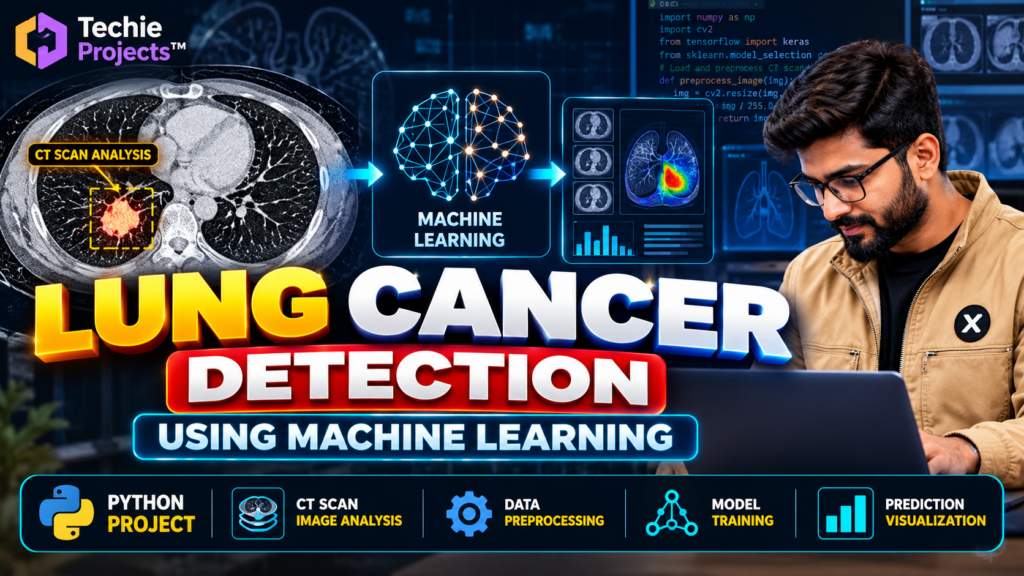
Lung cancer detection using machine learning is an educational medical image analysis project that explores how machine learning techniques can be applied to lung CT scan images. The project introduces students to image preprocessing, feature analysis, model training, and prediction visualization using Python.
This project is suitable for B.Tech, BCA, MCA, computer science, artificial intelligence, and machine learning students who want practical experience with medical imaging datasets and machine learning workflows.
The project demonstrates concepts for academic learning and research. It is not a clinically validated diagnostic system and must not be used to make medical decisions.
🎬 Project Working Demo
Watch the project demonstration to understand its interface, input images, and general workflow.
The demo can help students see how the application processes medical images and presents its output. The actual capabilities depend on the implemented model and the dataset used.
🎯 Objectives of Lung Cancer Detection Using Machine Learning
The main objectives of this project are:
- To explore medical image processing using Python.
- To understand preprocessing techniques for CT scan images.
- To learn how machine learning or deep learning models can analyze image data.
- To study model training and evaluation.
- To visualize model outputs through a graphical interface.
- To develop practical skills in computer vision and medical image analysis.
⭐ Key Features
1. CT Scan Image Input
The application can be designed to accept CT scan images as input for processing, depending on the supported image formats.
2. Image Preprocessing
Preprocessing may include resizing, normalization, and other transformations required by the model.
3. Machine Learning Model
A trained model processes the input image and generates an output according to its training and implementation.
4. Prediction Visualization
The application can display the model’s output in a user interface, making it easier to demonstrate the project during an academic presentation.
5. Python-Based Implementation
Python provides libraries and tools for image processing, machine learning, data handling, and model evaluation.
Confirm the exact features included in your project before advertising them as implemented functionality.
🔄 Project Workflow
The general workflow for a CT scan image analysis project includes:
- Dataset preparation: Collect an appropriately licensed dataset for research and learning.
- Image preprocessing: Prepare the images in the format required by the model.
- Model training: Train or load a suitable machine learning model.
- Model evaluation: Assess performance using appropriate validation data and metrics.
- Image inference: Process an input image using the trained model.
- Output visualization: Display the model’s result in the application.
The workflow depends on the particular model architecture and implementation supplied with the project.
How Lung Cancer Detection Using Machine Learning Works
Lung cancer detection using machine learning explores how computer algorithms can analyze medical images and identify patterns in CT scan data. In an educational project, the workflow typically includes image preprocessing, model training, prediction, and result visualization.
The performance of lung cancer detection using machine learning depends on the dataset, image quality, model architecture, and evaluation methodology. Results must be tested carefully before drawing conclusions about the model’s capabilities.
Dataset Preparation for Lung Cancer Detection Using Machine Learning
Dataset preparation is an important stage in lung cancer detection using machine learning. Images must be organized, checked for quality, and processed according to the model’s input requirements. Training, validation, and test data should be separated appropriately to reduce data leakage and produce a more meaningful evaluation.
Model Evaluation and Prediction Results
A lung cancer detection using machine learning project should evaluate its model using suitable metrics, such as precision, recall, sensitivity, specificity, and a confusion matrix where appropriate. Accuracy alone may not fully describe performance, especially when the dataset contains unequal numbers of examples in different classes.
The output should be treated as an experimental result, not a medical diagnosis. Clinical decisions must remain with qualified healthcare professionals.
🛠️ Technologies Used
Common technologies for this type of project include:
- Python: Main programming language.
- OpenCV: Image processing and image manipulation.
- NumPy: Numerical operations on image arrays.
- TensorFlow or PyTorch: Potential frameworks for deep learning models.
- Scikit-learn: Machine learning utilities and evaluation metrics.
- Tkinter or another GUI framework: Optional graphical interface.
The exact libraries and framework versions should be confirmed from the project source code and requirements file.
💻 Software and Hardware Requirements
Typical development requirements may include:
- Windows, Linux, or macOS
- Python and a compatible package environment
- A code editor such as Visual Studio Code
- Required machine learning and image processing libraries
- Sufficient RAM and storage for the dataset and model
GPU acceleration may be helpful for some deep learning workflows, but the actual hardware requirements depend on the model and dataset size.
🎓 Applications
Educational applications of this project include:
- Learning medical image processing concepts
- Studying machine learning workflows
- Exploring computer vision and deep learning
- Understanding dataset preparation and model evaluation
- Demonstrating an academic AI project
- Building a foundation for further medical imaging research
✅ Advantages
- Provides practical experience with Python and image data.
- Introduces machine learning concepts through a real-world research topic.
- Helps students understand model training and inference.
- Can support academic demonstrations and project presentations.
- Can be extended to explore additional image processing methods.
⚠️ Limitations and Medical Disclaimer
Machine learning predictions can be incorrect because of dataset limitations, image quality, model bias, and differences between training and real-world data.
A model developed for an academic project is not automatically suitable for clinical use. Reliable medical use requires rigorous validation, expert review, appropriate clinical studies, and regulatory compliance where applicable.
This project is intended for education and research only. It does not replace a radiologist or other qualified healthcare professional and must not be used to diagnose or rule out lung cancer.
🚀 Future Scope
Potential research extensions include:
- Comparing different model architectures
- Evaluating performance on independent datasets
- Improving image preprocessing methods
- Visualizing model attention or explainability maps
- Developing a more accessible interface
- Measuring precision, recall, sensitivity, specificity, and other relevant evaluation metrics
Any performance claims should be supported by actual experimental results rather than assumptions.
🎓 Why Choose This Project for Your Final Year?
Students interested in artificial intelligence, machine learning, deep learning, and computer vision may find this project a useful starting point for studying medical image analysis.
It offers opportunities to explore the complete machine learning workflow, from dataset preparation to model evaluation and output visualization. Students should review the implementation, understand the methodology, and follow their institution’s academic integrity requirements.
📲 Get the Lung Cancer Detection Project from Techie Projects
Looking for a machine learning project for your academic learning or demonstration?
Contact Techie Projects to enquire about the available implementation, source code, documentation, installation requirements, and pricing. Confirm the included model, dataset details, and deliverables before purchasing.
📲 Call/WhatsApp: +91-9460060699
🌎 Website: www.techieprojects.com
📺 Instagram: @pythonprojects_
🎓 Recommended Projects
Explore these related topics on Techie Projects:
- Skin Cancer Detection Using Machine Learning
- Dental Caries Detection Using Deep Learning
- Medical Diagnosis Using Machine Learning
- Plant Leaf Disease Detection Using Deep Learning
- Image Classification Using Python
Add internal links to the corresponding articles on your website.
Purchase the Lung Cancer Detection Using Machine Learning Project
Interested in the lung cancer detection using machine learning project for academic learning or demonstration? Contact Techie Projects to confirm source code availability, the implemented model, documentation, installation requirements, and pricing.
👉 Contact Techie Projects on WhatsApp
❓ Frequently Asked Questions
1. What is lung cancer detection using machine learning?
It is an application of machine learning techniques to analyze image data and study patterns associated with lung conditions. Academic projects demonstrate these concepts but do not automatically provide clinically reliable diagnoses.
2. Which programming language is used?
Python is commonly used because it supports image processing, machine learning, deep learning, and data analysis libraries.
3. Can CT scan images be used as input?
CT scan images can be used when their format and preprocessing requirements are compatible with the implemented model.
4. Is this project suitable for final-year students?
It may be suitable for students studying computer science, AI, machine learning, or medical image analysis. The scope should match the student’s academic requirements.
5. How can I purchase this project?
Contact Techie Projects through the WhatsApp link above to confirm availability, pricing, source code, documentation, and setup requirements.
Conclusion
Lung cancer detection using machine learning is a useful educational topic for students exploring Python, computer vision, and medical image analysis. It provides an opportunity to study image preprocessing, model training, evaluation, and prediction visualization.
For project availability and pricing, contact Techie Projects and confirm the implementation details before making a purchase.