
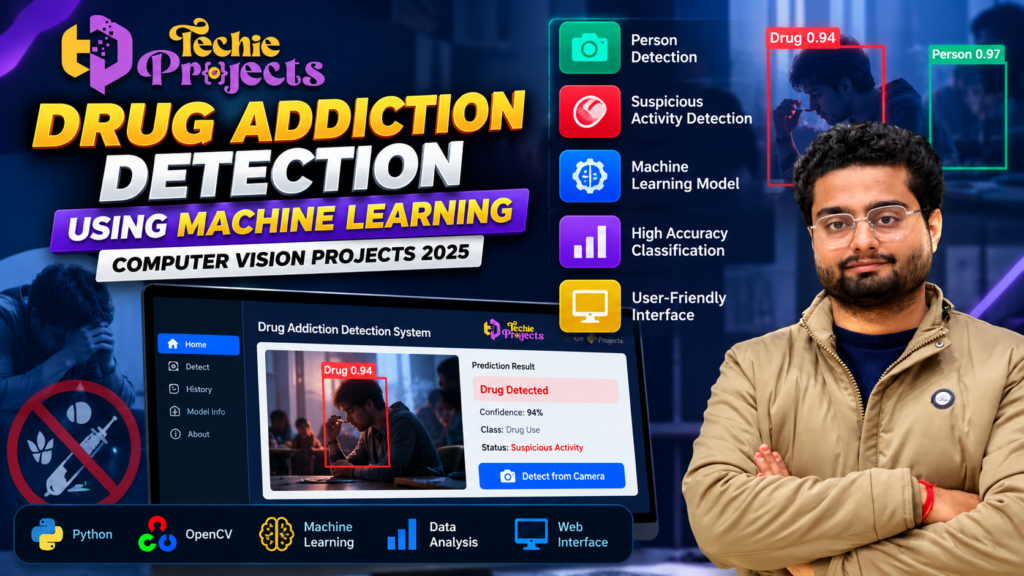
Drug Addiction Detection Using Machine Learning | Python Project
Are you looking for an innovative final-year engineering project that combines Python, machine learning, and computer vision? Drug Addiction Detection Using Machine Learning is an educational project idea that explores how computer vision techniques can analyze visual input and identify patterns defined by a trained model. It can help students understand image processing, machine learning workflows, prediction interfaces, and the practical challenges of building AI-based applications.
This project is suitable for students exploring Artificial Intelligence, Computer Science Engineering, Information Technology, and related technical fields. It can also serve as a starting point for learning how computer vision models are trained, evaluated, and integrated into a software application.
🎬 Project Demo
Explore the project demonstration to understand its interface, detection workflow, and implementation approach. The demonstration can help you see how the application processes visual input and presents its output.
Watch the project demo on the Techie Projects website or YouTube presentation to understand the available functionality before deciding whether this project matches your academic requirements.
🎓 What Is Drug Addiction Detection Using Machine Learning?
Drug Addiction Detection Using Machine Learning is a computer vision project concept that applies machine learning techniques to visual data. Depending on the dataset, model, and implementation, the application may analyze images or camera input to identify predefined visual patterns associated with the project’s detection task.
The purpose of this educational project is to demonstrate the development of an AI-based application rather than to diagnose addiction or determine whether a person uses drugs. Visual appearance alone cannot reliably establish substance use or addiction.
For engineering students, the project offers an opportunity to explore data preparation, model inference, computer vision, application development, and performance evaluation.
🎯 Objectives of the Project
The main objectives of this project include:
- Understanding the fundamentals of machine learning and computer vision.
- Learning how image datasets are collected, organized, and preprocessed.
- Exploring how trained models generate predictions from visual input.
- Developing a software interface for displaying prediction results.
- Evaluating model performance using appropriate test data and metrics.
- Understanding the importance of privacy, responsible AI, and model limitations.
- Preparing technical documentation and a project demonstration.
These objectives make the project useful for students who want practical exposure to AI application development.
⚙️ Technologies Used
The technologies depend on the specific implementation and software package available for the project. A typical development approach may involve the following tools.
1. Python
Python is a widely used programming language for machine learning and computer vision. It supports data processing, model integration, application development, and experimentation.
2. OpenCV
OpenCV can be used to load images, process video frames, resize input, and work with camera streams when supported by the application.
3. Machine Learning and Deep Learning
A trained machine learning or deep learning model can analyze input features and generate predictions. The model architecture and training process depend on the dataset and project design.
4. NumPy and Data Processing Tools
NumPy and related Python libraries can help prepare numerical data, transform arrays, and perform supporting operations during preprocessing and inference.
5. User Interface
A web-based or desktop interface can allow users to provide supported input and view the model’s output. The interface framework depends on the actual project implementation.
Before purchasing, confirm the exact libraries, model architecture, and features included in the available version.
🔍 How Does the System Work?
The general workflow of a computer vision detection application can be divided into several stages.
Step 1: Input Collection
The application receives an image, video frame, or another supported input source. The input method depends on the implemented project.
Step 2: Image Preprocessing
The input may be resized, normalized, or transformed into the format expected by the trained model. Correct preprocessing is important because the model’s predictions depend on the quality and format of its input.
Step 3: Model Inference
The trained model processes the prepared input and produces a prediction according to its learned patterns. Its output should be interpreted within the limitations of the training data and evaluation results.
Step 4: Result Display
The application displays the output through its user interface. Depending on the implementation, this may include a predicted class, confidence score, image annotation, or status message.
Step 5: Testing and Evaluation
The project can be evaluated using separate test data and suitable performance metrics. Students should examine false positives, false negatives, dataset limitations, and the effect of different input conditions.
🚀 Key Features of the Project
The features available depend on the supplied implementation. Potential features in a computer vision project include:
- Image-based prediction.
- Camera input, if implemented.
- Image preprocessing and visual analysis.
- Display of model prediction results.
- A user-friendly application interface.
- Model evaluation and testing.
- A modular Python code structure.
- Opportunities for future improvements.
Do not assume that every feature is included in the package. Ask Techie Projects to confirm the actual functionality before placing an order.
Benefits of Drug Addiction Detection Using Machine Learning
Drug Addiction Detection Using Machine Learning is an educational project that helps students explore computer vision, Python programming, and AI-based prediction workflows. By working with image preprocessing, trained models, and prediction outputs, students can gain practical experience in developing and evaluating machine learning applications. The project also highlights the importance of responsible AI, privacy, and understanding model limitations.
How to Develop Drug Addiction Detection Using Machine Learning
To develop Drug Addiction Detection Using Machine Learning, students can begin by understanding the dataset, selecting an appropriate model, and preparing input data for processing. The next steps involve integrating the trained model into an application, displaying prediction results, and evaluating performance using suitable test data. Clear documentation of the implementation, limitations, and testing process is essential for a complete academic project.
🎓 Why Choose This Project for Your Final Year?
Selecting a suitable final-year project is an important step for engineering students. A computer vision project can help connect theoretical concepts with practical software development.
Practical Learning
Students can learn about Python programming, image processing, machine learning workflows, and model evaluation in a single project.
Technical Presentation
The workflow can be explained through the dataset, preprocessing steps, model design, interface, test results, and limitations. This can help students prepare a structured technical presentation.
Customization Opportunities
Depending on the project architecture and available source code, students may explore alternative datasets, improve preprocessing, compare model performance, or develop additional interface features.
Portfolio Development
A well-documented and honestly evaluated project can demonstrate practical learning to recruiters, mentors, or academic evaluators. Students should understand the implementation rather than relying only on a demonstration.
🧩 Project Modules
The following modules describe a typical development structure. The exact modules included in the available project may differ.
| Module | Purpose |
|---|---|
| Input Module | Accepts supported image or video input |
| Preprocessing Module | Prepares input for model inference |
| Model Module | Generates predictions using the trained model |
| Results Module | Displays model output |
| Evaluation Module | Measures performance on test data |
| Interface Module | Connects user input with application output |
This modular structure can help students explain the software architecture and understand how individual components work together.
💻 Software and Hardware Requirements
A typical Python computer vision project may require:
Software requirements
- Python 3
- A compatible code editor or IDE
- Required machine learning and computer vision libraries
- A compatible operating system
- Dataset and model files required by the implementation
Hardware requirements
- A computer with a supported processor
- Sufficient RAM and storage
- A webcam only if live camera input is implemented
- A compatible GPU only if required by the selected model or configuration
The exact requirements depend on the model, dependencies, and application design. Confirm the installation instructions and compatible software versions before purchase.
🛒 Get the Drug Addiction Detection Project from Techie Projects
Are you looking for a Python and computer vision project for your engineering studies? Techie Projects helps students explore project ideas and understand their technical implementation requirements.
Before ordering, contact us to confirm the available package and whether it matches your college’s specifications.
Ask about the following:
- Availability of Python source code.
- Installation instructions and dependency requirements.
- Project documentation and technical explanations.
- Demonstration and implementation details.
- Supported input methods and actual project features.
- Customization options and available support.
- Pricing, delivery format, and payment terms.
Choose a project that you can understand, demonstrate, and explain confidently. Review the deliverables before making your purchase.
📲 Contact Techie Projects
📲 Call/WhatsApp: +91-9460060699
🌎 Website: www.techieprojects.com
📺 Instagram: @pythonprojects_
Send your branch, project requirements, and expected submission date to discuss suitable options.
🔮 Future Enhancements
Students may investigate the following improvements, subject to the project design and available data:
- Comparing different computer vision models.
- Improving the quality and diversity of the dataset.
- Measuring precision, recall, and other relevant metrics.
- Creating a more accessible user interface.
- Improving inference speed and resource efficiency.
- Adding responsible data handling and privacy safeguards.
- Documenting limitations and testing performance in varied conditions.
Any enhancement should be tested carefully and supported by evidence rather than assumed to improve accuracy.
🎓 Explore Related Projects
Students interested in artificial intelligence, Python, and computer vision may also explore these projects:
- Face Recognition Attendance System
- Driver Drowsiness Detection System
- Emotion Detection Using Machine Learning
- Fire and Smoke Detection Using CNN
- Smart Drone Detection System
- Fake News Detection Using Machine Learning
- Deepfake Detection System
Visit Techie Projects to explore available engineering project topics and confirm which implementations are offered.
❓ Frequently Asked Questions
1. What is Drug Addiction Detection Using Machine Learning?
It is an educational computer vision project concept that demonstrates how a trained model processes visual input and generates predictions according to its learned patterns. It should not be treated as a medical or diagnostic tool.
2. Which programming language is used?
Python is a common choice for this type of project. The exact libraries and frameworks depend on the implementation.
3. Is this project suitable for final-year engineering students?
It may be suitable for students studying computer science, information technology, AI, or related fields, provided the project meets their institution’s requirements.
4. Does the project include source code and documentation?
The available deliverables can vary. Contact Techie Projects to confirm whether source code, documentation, installation instructions, and technical explanations are included before purchasing.
5. Can I customize the project?
Customization depends on the source code, model architecture, dataset, and available support. Discuss your requirements before ordering.
6. Can the system determine whether someone is addicted to drugs?
No. A computer vision prediction cannot reliably diagnose addiction or establish that a person uses drugs. Addiction assessment requires appropriate professional evaluation, and visual appearance alone is not sufficient evidence.
7. How can I purchase this project?
Contact Techie Projects through WhatsApp or visit techieprojects.com. Confirm the deliverables, price, compatibility, and support terms before placing your order.
🏁 Conclusion
Drug Addiction Detection Using Machine Learning provides an educational way to explore Python, computer vision, model inference, and responsible AI development. By studying its workflow and evaluating its limitations, engineering students can build their understanding of how AI-based software applications are designed and tested.
If you are planning a final-year or academic project, contact Techie Projects to discuss the available implementation, technical requirements, and package details.
Start your project journey with Techie Projects.
📲 Contact us on WhatsApp | 🌐 Visit our website | 📸 Follow us on Instagram